
The Gateway Is Built. The Pathway Is Clear. Somebody Just Has to Walk Our Kids Through It
By Tarek DeLavallade, Executive Director of the United Golfers Association and Founder & Tour Commissioner of the Sapphire Golf Tour
A version of this piece originally appeared in the Memphis Commercial Appeal.
Fewer than 50 students across Memphis-Shelby County Schools play on a high school golf team — out of more than 100,000 kids in the district. That’s less than half a percent.
I didn’t move to Memphis on a mission. I came to relocate, to enjoy a city with one of the biggest cultural footprints in America, not knowing what my impact here would be — or could be. But somewhere across countless meals and sidebar conversations, I realized something: Memphis indirectly needed me.
As an entrepreneur and visionary who has spent six years leading the United Golfers Association and just launched the Sapphire Golf Tour, I came thinking I understood the golf ecosystem in Black communities. What I found instead was a city sitting on something special — and a chance for Memphis to leave a far larger mark on the national golf scene than anyone here realizes. Because what I discovered has nothing to do with professional tours. It’s about what golf can do for your kid, your daughter, your community.
Golf isn’t just a sport; it’s a mindset
Here’s what people in Memphis don’t realize yet: golf isn’t just a sport, it’s a mindset. It teaches you to compete against yourself, stay composed under pressure, think strategically. It opens doors to college scholarships and builds discipline in ways basketball and football, as beloved as they are here, simply don’t. And you can love both — Penny Hardaway, a true Memphian, loves golf as much as basketball. These aren’t competing interests; they’re complementary mindsets.
The United Golfers Association is the institution that gave Black golf its giants. Founded in 1925, it was the only national professional golf tour for Black players in American history — where nearly every Black professional before Tiger Woods earned their stripes. Ted Rhodes, Charlie Sifford, Lee Elder, Renée Powell, Ann Gregory, Althea Gibson built their legacies within the UGA when the PGA still had a “Caucasian-only” clause in its bylaws. That legacy is still being written — by Memphis. JP Thornton, Greg Odom Jr., and Clay Myers came out of this city and went on to do remarkable things in golf. Memphis grew them. But here’s what stops me cold: I can name the men. I can’t yet name the women — not because the talent isn’t here, but because the pathway was never built for them.
This isn’t a new idea for Memphis. In the early 1990’s, the Mid-South Junior Golf Association — founded by Charles Hudson, the former pro at Pine Hill — gave young players a real pathway into the game. Somewhere along the way, that momentum faded. I’m less interested in why than in what it proves: Memphis has done this before. We know how.
How do you build youth golf capacity and interest?
So what do we do now? We build from the ground up, where the kids already are. Memphis is more than 65% African American — a distinction no other major American city can claim — and yet the number of young people introduced to golf early remains painfully low. The city owns and manages seven-plus golf courses, with more than $15 million invested into beautifying them. And for children 17 and younger, golf is free at every one of those courses. Free. So why are fewer than 50 high schoolers on a golf team?
Access on paper isn’t access in practice
Because access on paper isn’t access in practice. We have something free, world-class, sitting right in these neighborhoods — and we’re not intentionally introducing our kids to it. Why offer a community something free but never present it, never make it reachable? A resource nobody knows about isn’t a resource at all. The gateway is already built. Somebody just has to walk our young people through it.
Look at what’s already possible. Pine Hill has been hallowed ground for Memphis golfers for decades — it’s where Tiger Woods held a clinic in 1997, right after he won the Masters. The man running it today is my best argument. Will Keys took part in that very clinic as a 15-year-old and was an inaugural member of the Mid-South Junior Golf Association. He hit his first golf ball on that property as a kid; today he’s the facility manager, pouring himself back into the community that raised him. After a renovation through the city’s Accelerate Memphis plan, Pine Hill reopened less than three years ago and hosted the 2026 season opener of the Sapphire Golf Tour. Will Keys isn’t a hypothetical. He’s living proof of what this pathway produces when a kid is given a way in and a reason to come back.
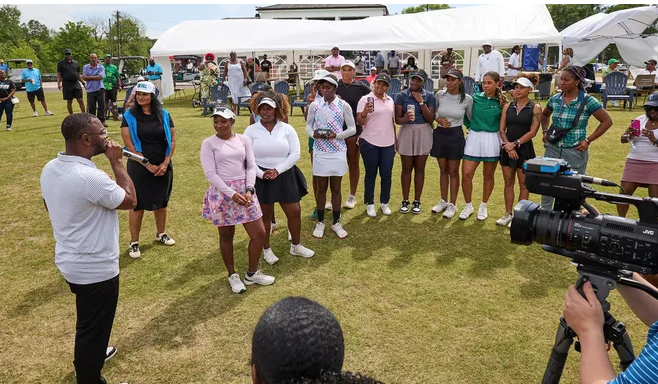
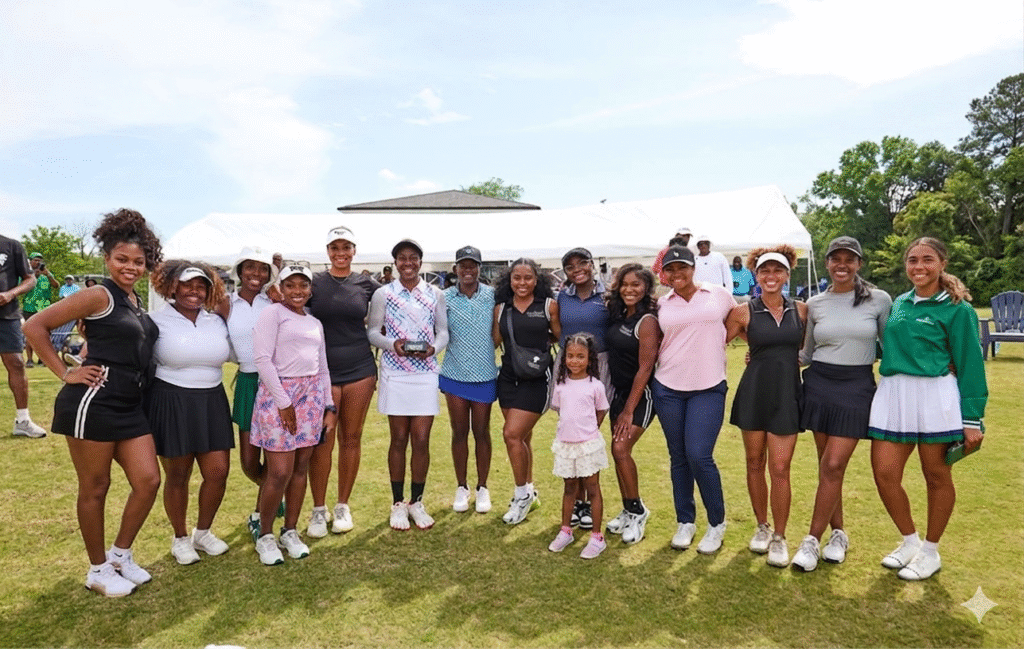
The centerpiece of my vision is a girls golf program built right here in Memphis, designed for young women of color who’ve never been given a way into the sport — not as an afterthought, but as the flagship. I want Memphis to prove this model works, then replicate it nationally through the Sapphire Golf Tour. The timing has never been better: there are now more than 30 HBCUs with women’s golf programs actively looking for talent. Combine that with the more than $80 million in golf scholarships going unclaimed every year, and the math is impossible to ignore. We have somewhere for these young women to go. We just have to build the road that gets them there.
When people say it takes a village, I’d offer a correction: it takes a city. It takes leadership deciding, from the top down, that we will no longer tell our young people that basketball or music is the only way out. We can reimagine golf as a bridge — a pipeline that runs from Orange Mound to Frayser, from East Memphis down to Whitehaven. Every neighborhood. Every kid.
So this is my call to the city I now call home: pour in. The infrastructure is built, the courses are beautiful, the access is free, and the scholarships are waiting. What we need now is intention — leadership and partners, organizations rooted right here in Memphis, willing to bring the passion, the grit, the creativity, and the vision to make this real. Memphis has done it before. The legacy is in our bones. Let’s build the pathway that turns half a percent into a generation.
Tarek DeLavallade lives in Memphis and is Executive Director of the United Golfers Association and Founder & Tour Commissioner of the Sapphire Golf Tour.