Most brands chase fans. Smart brands build them. The Sapphire Golf Tour brand investment opportunity is built on something professional sports has overlooked entirely: a fanbase that does not just watch—they amplify, architect, and invest. Black women are the untapped power base in sports, and the brands that recognize this first will own the most influential audience pipeline professional sports has produced in a generation.
This is not about consumer spending. This is about group economics, leadership, and the multiplier effect of a fanbase that turns small decisions into market movements.
The Untapped Power Base Sports Keeps Missing
Black women are the most engaged, most influential, and most under indexed sports fanbase in America. They spend over twice as much time on social media as white women and engage with digital video platforms over sixty percent more than the national average. As a result, when Black women show up to a sport, the sport gets amplified across every digital channel that matters.
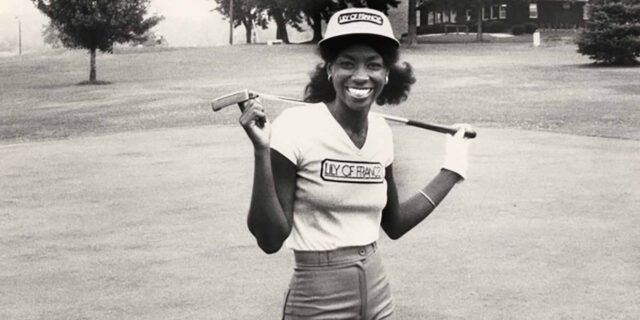
Furthermore, Black women are the cultural architects of golf’s next chapter. On TikTok, YouTube, and Instagram, they are creating viral content around golf style, legacy, and storytelling—turning niche moments into mainstream celebration. Most importantly, Black women spectators bring cross generational pride and cultural resonance that reshape how the sport looks, feels, and is understood on screen and in real time.
Therefore, Sapphire is not just about reaching a new audience. It is about activating an audience that already amplifies everything they touch.
Group Economics: Why the Power of Many Beats the Power of Few
Most sports league sponsorship strategies obsess over the single high net worth decision maker. However, the real economic engine in America is group economics—the collective purchasing, recommending, and amplifying power of an interconnected community.
Black women are the strongest example of group economics at scale. When one Black woman recommends a product, the recommendation travels through her family, her friend group, her professional network, her sorority, her church, her workplace, and her social media following. A single endorsement becomes hundreds. Hundreds become thousands. Thousands become market movements.
This is why Mielle Organics scaled fast enough to attract a P&G acquisition. Why Fenty hit one hundred million dollars in revenue in forty days. Why The Honey Pot forced legacy feminine care brands to redesign entire product lines. In each case, the brand earned trust with Black women, and group economics did the rest.
For Sapphire, this changes the math entirely. Sponsoring brands are not buying access to ten thousand spectators. They are buying access to a multiplier network that turns ten thousand into ten million.
Black Women Leaders and Entrepreneurs: The Decision Makers Brands Are Ignoring
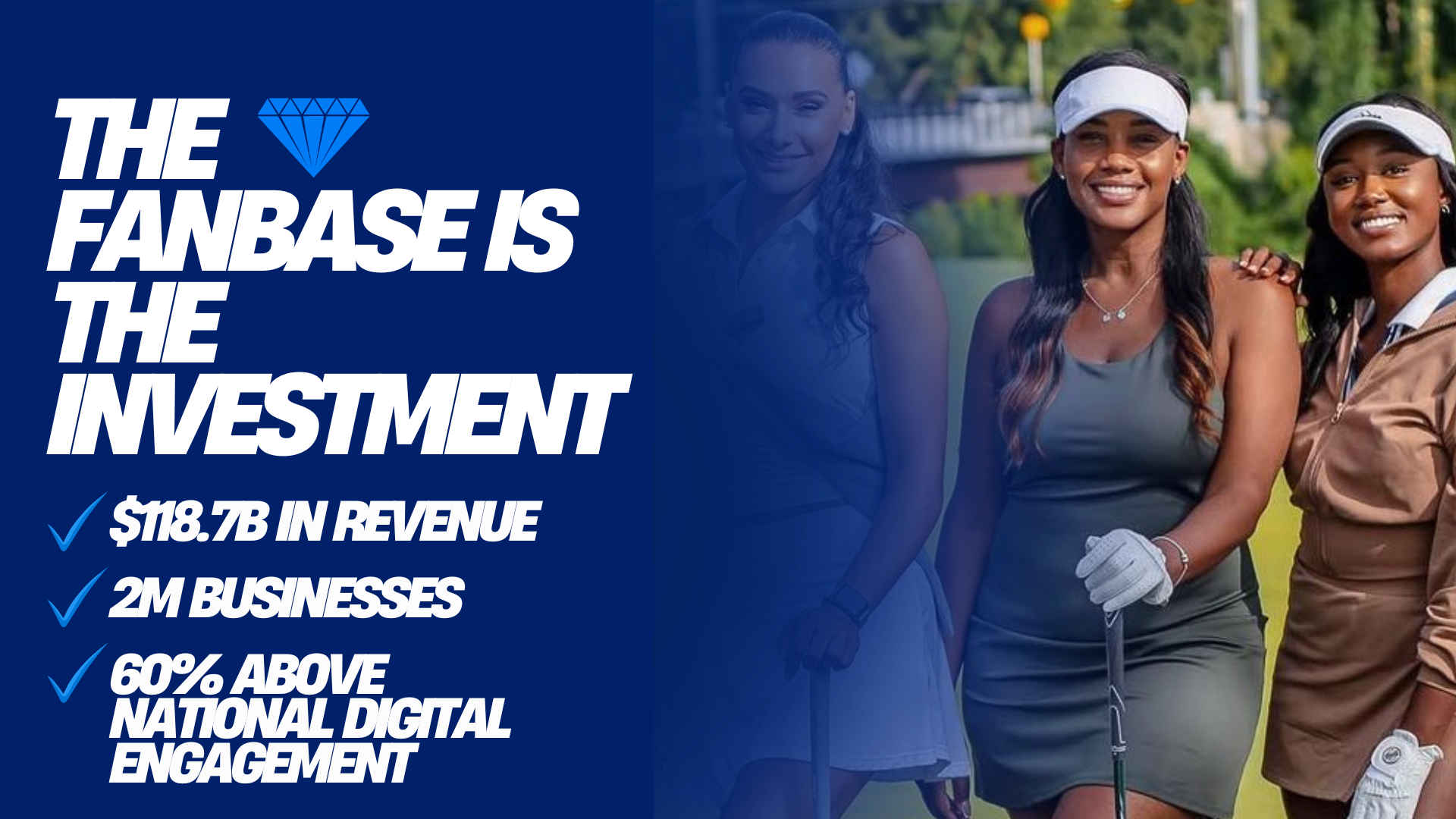
Black women are the fastest growing leadership and entrepreneurial class in America. According to Wells Fargo’s 2025 Impact Report, Black women own two million businesses that employ over six hundred forty seven thousand people and generate one hundred eighteen point seven billion dollars in revenue. Between 2024 and 2025, Black women owned employer firms grew thirteen percent—more than triple the four point four percent growth of female owned businesses overall. In the first half of 2025 alone, three hundred thousand Black women launched new businesses.
Goldman Sachs’ Black Womenomics research projected that closing the earnings gap for Black women would generate over one million new jobs and add three hundred to four hundred fifty billion dollars to annual U.S. GDP. This is not a future opportunity. This is current economic momentum.
These women are buying for their companies. They are choosing vendors. They are approving sponsorship deals. They are shaping marketing budgets. Additionally, while only two Black women currently lead Fortune 500 companies, the pipeline of Black women in senior decision making roles—marketing, procurement, partnerships, corporate strategy—is expanding across every major industry. When Sapphire aligns with Black women athletes and the fanbase that supports them, it simultaneously aligns with the executives who control where corporate sponsorship dollars go.
Why Small Decision Makers Become Big Investment Cases
Most brand strategists calculate audience value as average individual purchasing power multiplied by audience size. However, that formula ignores the multiplier effect of group economics, social amplification, and recommendation networks.
For Black women, each fan represents her own purchasing decisions plus her ability to influence dozens of others through her network. Each entrepreneur represents her business spending plus her ability to recommend vendors to other entrepreneurs. Each executive represents her corporate budget authority plus her ability to bring opportunities to the boardroom.
When you stack those layers, sponsoring brands are not buying impressions. They are buying entry into a referral and amplification network that operates twenty four hours a day across every platform, workplace, community, and household where Black women hold influence. In group economics, no decision is small. Every recommendation is a node in a network that multiplies exponentially.
The Investment Case Brands Cannot Afford to Miss
Women’s sports investment crossed one billion dollars in 2024 and is projected to hit two point five billion by 2030—a two hundred fifty percent jump. However, most of that capital is chasing soccer, basketball, and tennis—sports where audiences are saturated with brand competition and entry costs are climbing fast.
Sapphire is different. It sits at the intersection of an underpriced sport with deep corporate sponsorship infrastructure, an exploding cultural moment for Black women across leadership and culture, and a fanbase that operates as a built in amplification engine.
Therefore, the brands that move first do not just get a sponsorship logo. They get cultural authority with a fanbase that becomes their growth engine, pipeline access to Black women entrepreneurs and executives who control real budgets, and first mover positioning in a tour that, five years from now, will cost ten times more to sponsor than it does today.
The Bottom Line
The Sapphire Golf Tour is not asking brands to feel anything. It is offering brands the most strategic fanbase, leadership network, and economic multiplier in professional sports today.
The case is built on real numbers. Two million Black women owned businesses. One hundred eighteen point seven billion in entrepreneurial revenue. Goldman Sachs projecting four hundred fifty billion in additional annual GDP. The fastest growing entrepreneur class in America. A fanbase that amplifies sixty percent above the national average on digital platforms and twice as much on social media.
Group economics is the most underestimated investment thesis in modern sports marketing. Black women operate at the center of it. The Sapphire Golf Tour is the only professional sports platform engineered to align with that thesis directly. The brands doing the math already see it. The brands that wait will pay ten times more to chase what early movers will already own.
Numbers over narratives. Investment over intention. The Sapphire Golf Tour is where the smart money is moving—because the fanbase is the investment, and the math is already proven.